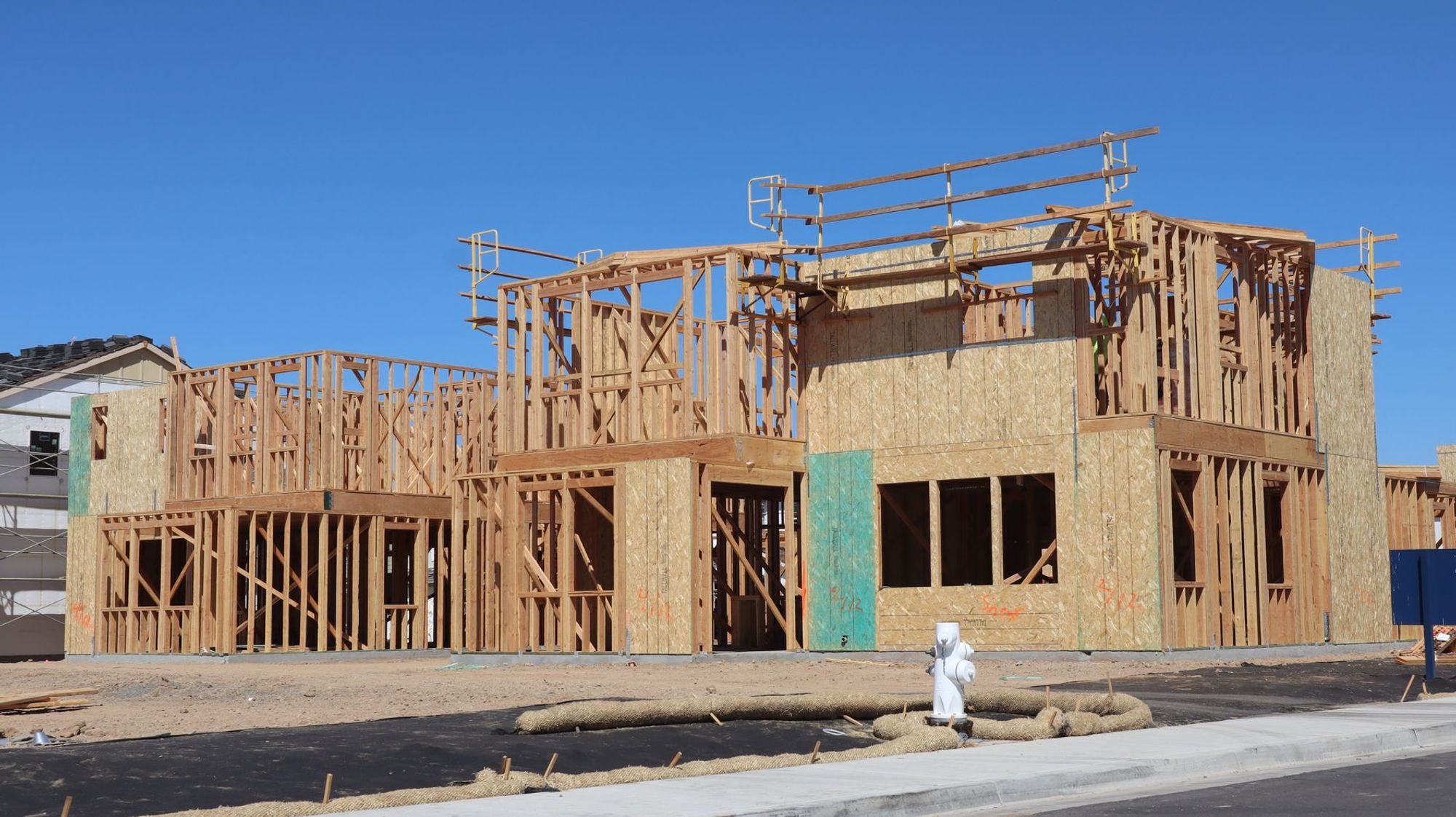
New home prices rose 5.4% in the 12 months to August 2026, according to the Australian Bureau of Statistics (ABS), even as the value of existing homes slipped. Builders are passing on higher labour and materials costs, while the Reserve Bank of Australia (RBA) says established housing prices have fallen in most capital cities. For borrowers, that split matters: building a home now costs more, and any car loan you carry reduces how much you can borrow to fund it.
Short answer: building costs are still rising while established home values are softening. If you plan to build or buy a new home in the next year or two, a car loan taken out now will usually count against your home loan borrowing power, so it pays to plan the two together rather than one after the other.
What the latest figures show for new home prices
Three ABS releases and the RBA's latest statement give a consistent picture:
- New dwellings: prices rose 5.4% in the 12 months to August 2026, down from 5.7% in the 12 months to July. The ABS said project home builders raised base prices to pass through higher labour and materials costs over the year (Consumer Price Index, released 30 September 2026).
- Established homes: the mean price of residential dwellings fell by $8,200 to $1,100,400 in the June quarter 2026, and the total value of the nation's homes fell by $34.1 billion to $12,688.9 billion (Total Value of Dwellings, released 8 September 2026).
- Building approvals: total dwellings approved fell 6.1% to 16,953 in August 2026 in seasonally adjusted terms. Private sector house approvals rose 3.7% to 10,885, while private sector dwellings excluding houses fell 2.6% (Building Approvals, released 30 September 2026).
- The RBA view: after raising the cash rate to 4.60% on 29 September 2026, the RBA said housing prices have fallen in most capital cities and new housing loans have declined noticeably.
Why new home prices are rising while values fall
Established home prices respond to buyer demand and borrowing costs. With the cash rate rising four times in 2026 and new housing loans declining, demand has cooled and average values have eased.
New home prices follow a different driver: what it costs to build. A builder's base price reflects labour, materials and margins, and those inputs have kept climbing. That is why the ABS can report falling established values and rising new dwelling prices in the same quarter. For someone comparing the two paths, an existing home may now be relatively cheaper than it was, while a house and land package or a knockdown rebuild has become more expensive.
How the property market differs by state
The mean dwelling price moved in different directions across the country in the June quarter 2026:
- Fell: New South Wales ($1,304,900), Victoria ($918,400) and the ACT ($981,700)
- Rose: Queensland ($1,130,600), Western Australia ($1,123,700), South Australia ($979,600), Tasmania ($733,200) and the Northern Territory ($614,400)
Building approvals in August were also mixed. Total dwelling approvals fell in Queensland (down 22.5%), New South Wales (down 17.3%) and Tasmania (down 1.5%), and rose in South Australia (up 24.0%), Victoria (up 8.9%) and Western Australia (up 3.2%). Monthly approval figures are volatile, so one month is a signal rather than a trend.
What rising new home prices mean for your borrowing power
When a lender assesses a home loan, it adds up your income, subtracts your living costs and existing debts, and tests whether you could still afford repayments at a higher interest rate. A car loan repayment is one of those existing debts. Lenders generally count the full scheduled repayment, not the balance, so even a modest car loan can reduce the amount you can borrow for a home.
That interaction is sharper when building costs are rising. If your builder's quote increases by tens of thousands of dollars, you may need a larger home loan at the same time as your car repayment is reducing how much you can borrow. Our guide on how the property market affects a car loan explains the two-way link in more detail.
Planning a car purchase around a home build
If both a car and a home are on your list, the order and timing matter:
- Check your borrowing power first. Use our loan calculators to see how a car repayment changes what you could borrow for a home.
- Consider the size and term of the car loan. A smaller loan or a cheaper car keeps more room for the home loan. A longer term lowers the repayment but raises the total interest.
- Pay off or restructure existing debt. If you already have a car loan, refinancing your car loan to a lower rate could reduce the repayment a home lender sees.
- Talk to the home lender before buying a car. Taking on new debt after a home loan approval can affect your application, especially during a construction loan with progress payments.
- Allow for cost increases. With new dwelling prices rising, many borrowers keep a buffer for variations and price rises in the build.
If you are a first home buyer, our piece on the 5% Deposit Scheme and your car loan covers how a car debt interacts with scheme price caps and lender assessment.
What higher interest rates add to the picture
The RBA cash rate target is 4.60%, effective 30 September 2026, and the RBA has said it will increase the cash rate further if needed. Its next decision is due on 3 November 2026. Higher rates lift home loan repayments and the assessment rate lenders use, which reduces borrowing power for both home and car loans. Our article on what a home loan rate rise means for your car loan walks through the numbers.
Car loan pricing is set by each lender and does not always move with the cash rate. You can compare current car loan rates and browse the lenders we compare to see how offers differ.
What to watch next
The ABS will release September building approvals on 2 November 2026 and the next Total Value of Dwellings figures, for the September quarter, on 1 December 2026. The September CPI, with an updated read on new dwelling prices, is due on 28 October 2026. Earlier coverage of the building pipeline is in building approvals fell in July 2026.
The bottom line
New home prices are rising 5.4% a year because building costs keep climbing, while established home values have eased and new housing loans have declined. If a home build or purchase is in your plans, treat any car loan as part of the same budget: check your borrowing power with the car repayment included, keep the car loan proportionate, and allow for further cost increases before you sign.
Figures in this article are from the ABS Consumer Price Index (August 2026), Building Approvals (August 2026) and Total Value of Dwellings (June quarter 2026) releases and the RBA's 29 September 2026 statement and cash rate target page, all checked on 6 October 2026.