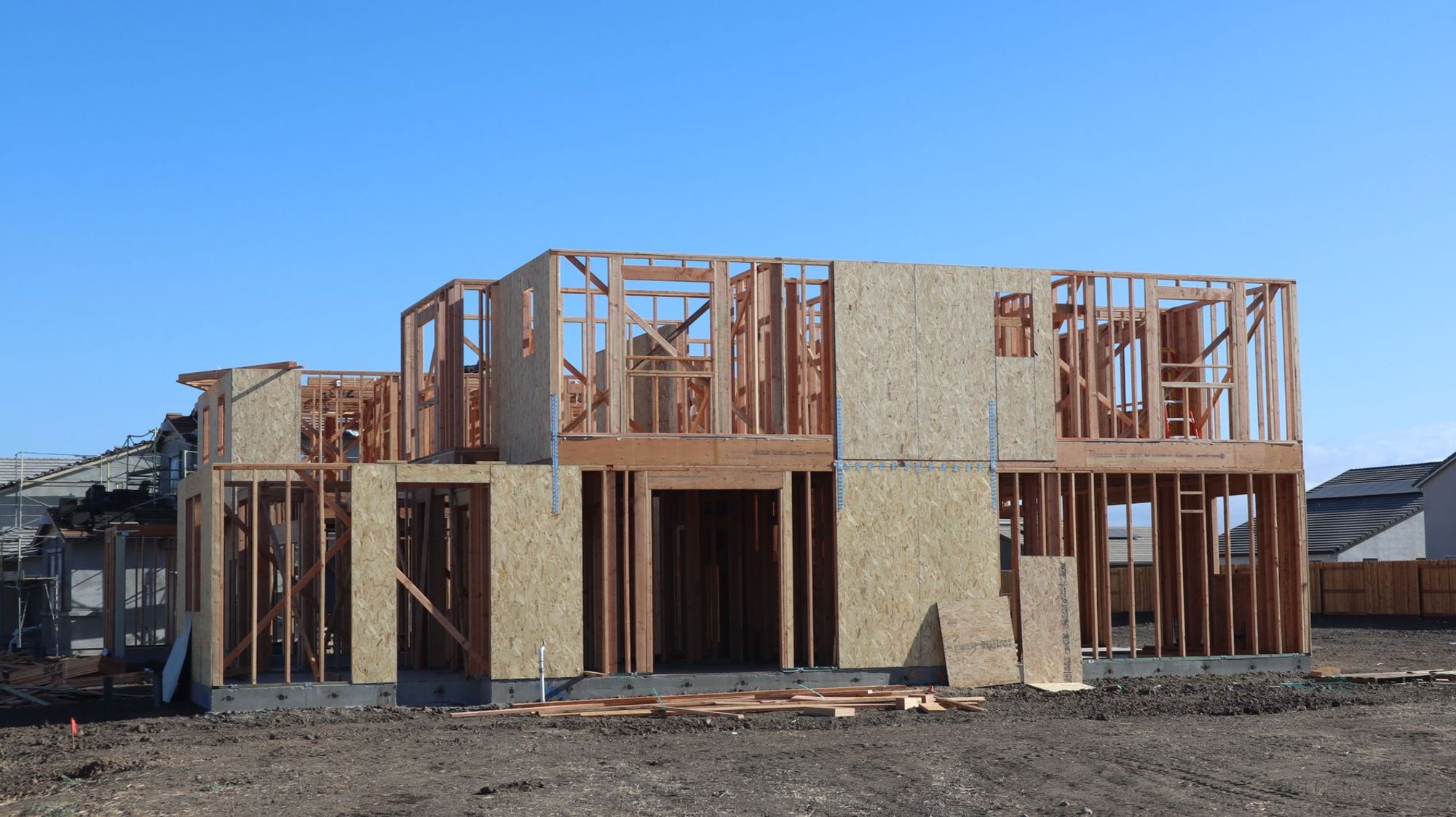
The average new house approved in Australia in the September quarter 2026 carried a build value of about $529,600, up 4.8% on the same quarter a year earlier. That figure is our calculation from the Australian Bureau of Statistics (ABS) Building Approvals, Australia, September 2026 release, published on 2 November 2026. It is not a house price: it is the estimated cost of the building work, before land. But for anyone planning to build, or to buy a car while a build is under way, it is one of the most direct official measures of what a new house costs to put up.
New house build costs: the quick answer
- Across the three months to September 2026, 34,249 new houses were approved with a combined value of $18.14 billion, an average of $529,618 per house (ABS Table 20 and Table 21, original series).
- In the same three months of 2025, 30,442 houses were approved with a combined value of $15.39 billion, an average of $505,466.
- That is a rise of $24,152, or 4.8%, in a year. The same calculation for the September quarter 2019 gives $327,630, so the average approved build value is about 61.7% higher than seven years ago.
- All six states recorded a higher average than a year earlier, with Western Australia up the most at 10.1%.
What the ABS headline figures showed
The ABS headline numbers for September 2026 are about volume. In seasonally adjusted terms, total dwellings approved rose 5.1% to 17,948, private sector house approvals fell 5.3% to 10,432 and private sector dwellings excluding houses rose 16.6% to 6,579 (ABS). The value of new residential work fell 3.3% to $9.74 billion.
Those headline moves say how many homes are entering the pipeline. They do not say what each home costs to build, which is why we divided the value of new houses approved by the number of new houses approved, using the original (unadjusted) series. We used whole quarters rather than single months because monthly averages move around with the mix of projects: the September month alone averaged $533,881, against $520,518 in August.
What the value figure includes, and what it does not
The ABS says the value of building approved is built from the estimated "value of building work when completed" reported on approval documents, and that conceptually it should "exclude the value of land, demolition and landscaping but include site preparation costs" (ABS methodology). The ABS also notes these estimates are "usually a reliable indicator of the completed value of 'houses'", while for project homes the reported value is usually the contract price.
So read the $529,618 as an average approved build value, not a full purchase price. If you are building, the land, stamp duty, connection costs, landscaping, driveways, fencing and window coverings sit on top, and each can be a meaningful sum. If you are buying an established home, this figure is a guide to replacement cost rather than to what you will pay.
Average new house build value by state
Our calculation from the ABS state tables (original series, three months to September) compares the September quarter 2026 with the same quarter of 2025:
- New South Wales: $575,869, up 3.5% from $556,198
- Queensland: $545,071, up 3.6% from $526,044
- Victoria: $531,794, up 3.8% from $512,129
- Western Australia: $497,099, up 10.1% from $451,676
- South Australia: $446,855, up 5.5% from $423,574
- Tasmania: $443,242, up 2.0% from $434,654
We have left out the Northern Territory and the ACT, where fewer than 250 houses were approved in each quarter, so a handful of large or small projects can swing the average sharply. The state figures come from ABS Tables 22 to 27 in the same September 2026 release.
What a $24,152 increase means for repayments
To show how a higher build value flows into a loan, here is an illustration. It assumes, purely for the arithmetic, that the extra $24,152 is borrowed over 30 years on principal and interest repayments, with no fees.
- At an assumed 6.00% a year, the extra $24,152 adds about $145 a month.
- At an assumed 9.00% a year, it adds about $194 a month.
Rates can change over a long loan term, and the second line shows how the same extra amount weighs more at a higher rate. Each lender sets its own assessment approach, so treat these as illustrations, not quotes. The point is that a build cost increase that looks modest against a $500,000 contract can still take a noticeable bite out of the monthly surplus a lender sees, and that surplus is the same one it uses to assess a car or personal loan.
If you are building and need a car too
A build and a car purchase often land in the same year: a longer commute to a new estate, or a second car once you move. Lenders look at all your commitments together, so the order and timing can matter. A few points to check:
- Price the build from your actual contract, then add the costs the ABS figure leaves out, such as land, stamp duty, connections and landscaping, before you set a car budget.
- Allow for variations. A contract price can rise during construction, and any increase you fund with extra borrowing raises your repayments.
- Think about sequencing. Applying for a car loan while your construction loan is being assessed adds a credit enquiry and a new commitment to the picture; our guide to household expenses and loan applications explains what lenders check.
- Test the car repayment separately. Run the numbers in the car loan calculator at a few different rates and terms, and compare current car loan rates on their comparison rate and fees.
- Weigh up using home loan equity carefully. It can mean paying off a car over a much longer term; our guide to using your mortgage to buy a car covers the trade-offs.
If you would rather keep the car separate from the home loan, a dedicated car loan or personal loan keeps the term matched to the car's life.
How this fits with other property data
The build value figure is one piece of the housing cost picture. For what happened to prices for new homes, see our report on new home prices rising 5.4%, and for how approvals move through to construction, see dwelling commencements in the June quarter. The August 2026 building approvals report covers the previous month's volumes.
The ABS lists the October 2026 building approvals release for 1 December 2026 (ABS). This article is general information only and does not take your circumstances into account.