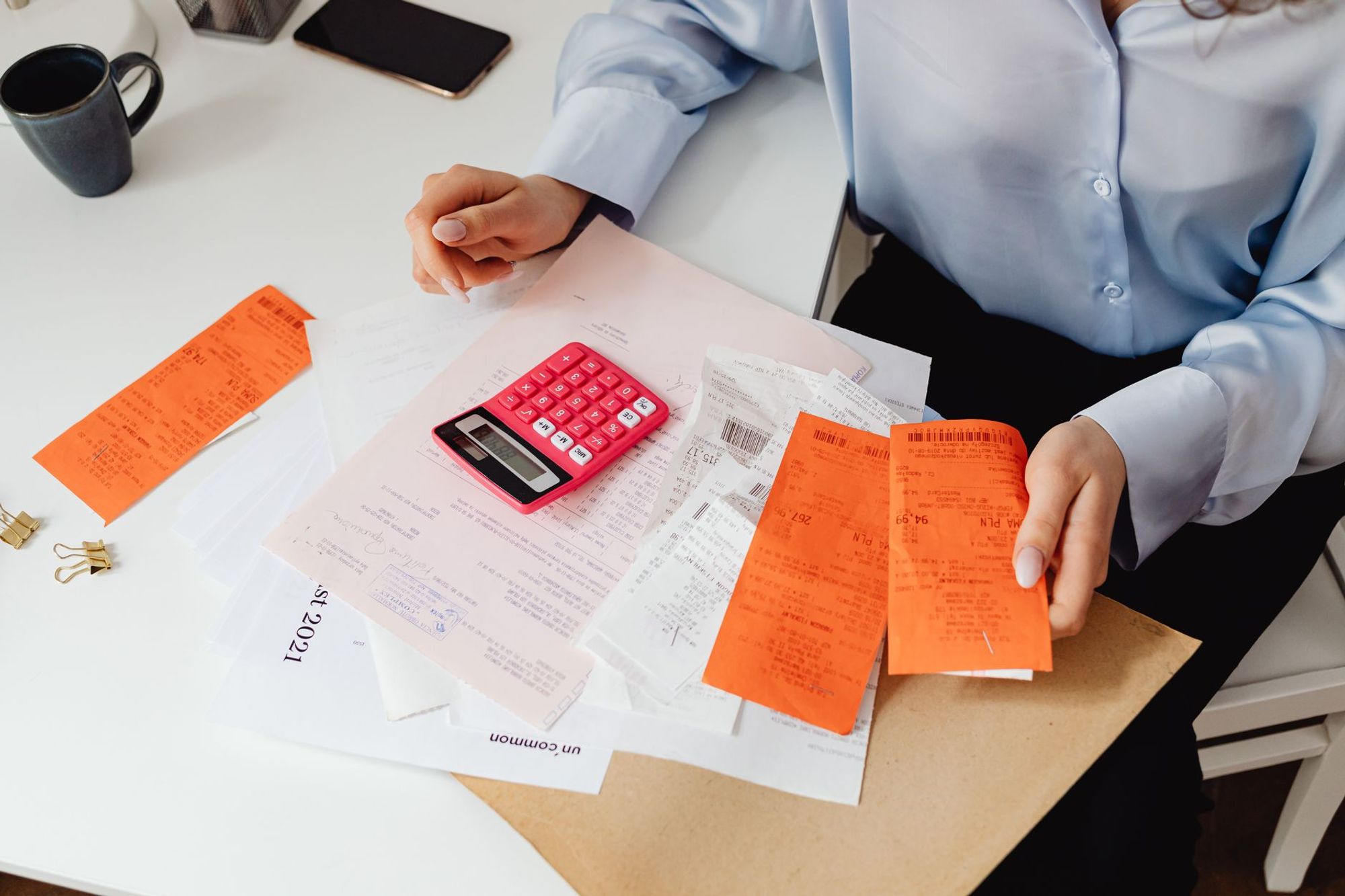
Australian small businesses paid around 79.5% of the income tax they owed in 2023-24, according to the ATO's latest small business income tax gap estimate, updated on 28 October 2026. The net gap is an estimated $36.0 billion, or 20.5% of the tax that should have been paid, and omitted income is the largest single cause.
That is a tax compliance story first. It also matters to anyone self-employed who plans to borrow, because a lender can generally only work with the income your tax returns, BAS and bank records actually show. This article sets out what the ATO found, and a worked example of what under-declared income can do to the numbers a lender sees.
This is general information, not tax or credit advice.
The small business tax gap in 2023-24
The ATO's estimate covers about 5.99 million small business taxpayers, meaning companies and individuals in business with turnover of up to $10 million. Its key figures for 2023-24:
- Net gap: an estimated $36.0 billion, or 20.5% of the theoretical tax liability. The revised 2022-23 net gap is 20.2%, up from the 17.4% first published in 2025.
- Gross gap: 21.1% of the theoretical liability, up from 15.0% in 2019-20.
- What drives it: omitted income makes up 70% of the gross gap, overclaimed deductions 16%, people operating outside the tax system 8%, hidden wages 3% and long-term non-payment 3%.
- Deliberate behaviour: the ATO attributes about $22.0 billion, around 60% of the gross gap, to the shadow economy. It links much of that to around 7% of taxpayers in its random sample who made deliberate attempts to avoid paying the right amount of tax.
The ATO notes the 2023-24 figure is based on a partly completed sample of 1,326 cases and will be revised. For comparison, its estimate for individuals not in business, mainly people on salary and wages, is a net gap of 7% for 2023-24.
The ATO is also clear that most small businesses in its sample reported correctly or genuinely tried to. The common problems it lists include mistakes from misunderstanding obligations, poor record keeping, undeclared business income, and private expenses claimed as business costs, including motor vehicle expenses.
Why declared income matters when you apply for a car loan
For a consumer car loan, ASIC's responsible lending guidance says lenders must make reasonable inquiries about your financial situation and take reasonable steps to verify it. For self-employed applicants, that verification usually leans on lodged tax returns, notices of assessment, BAS and bank statements. Business-purpose finance generally sits outside those consumer rules, but commercial lenders still price and approve on the documents in front of them, as our guide to low doc ABN car loans explains.
The practical point is simple. Income that never appears in your tax return is income a lender has no reliable way to count. Lowering your taxable income lowers your tax bill, and it also lowers the income a lender can assess.
Worked example: what $20,000 of undeclared income does on paper
This is our own illustration using the ATO's 2025-26 resident tax rates plus the 2% Medicare levy, ignoring any tax offsets. It is not a lender's assessment formula.
Imagine a sole trader whose real business profit is $90,000, but who declares $70,000.
- Declared $70,000: tax of $11,788 plus $1,400 Medicare levy leaves $56,812 a year, about $4,734 a month after tax.
- Actual $90,000: tax of $17,788 plus $1,800 Medicare levy leaves $70,412 a year, about $5,868 a month after tax.
- The difference: the lower figure saves $6,400 in tax and levy, but it shows a lender about $1,133 a month less after-tax income than the business really earns.
To put that monthly figure in context, a $30,000 car loan at an assumed 8% p.a. over five years costs about $608 a month. In this example, the income missing from the tax return is larger than that whole repayment. Lenders apply their own expense estimates and buffers, so the exact effect on any application will differ, but the direction is the same: an application can only be assessed on the income that is documented.
There is also the risk on the tax side. Income later picked up by the ATO can bring an amended assessment and a debt, and an outstanding ATO debt is something lenders ask about. Our article on ATO tax debt and your car loan covers how that plays out.
A checklist before a self-employed car loan application
Before applying, it can help to check:
- Your most recent tax returns are lodged and your notices of assessment are on hand. If you missed the 31 October lodgment date, our article on why your tax return matters for your car loan explains what lenders usually look for.
- Your BAS lodgments are up to date and broadly match the turnover shown in your business bank account.
- Business and private spending are separated, so a lender reading your statements can see what the business earns and what you spend personally.
- Vehicle costs are claimed correctly. The ATO lists mixing private and business use of motor vehicles among common errors.
- Your accountant can explain any large add-backs or one-off deductions, such as depreciation, that make taxable income look lower than the cash the business produces.
- You know your repayment range before you apply. The car loan repayment calculator shows the effect of the amount, rate and term.
If your financials are not ready yet, low doc finance is one route, usually at a higher rate. You can compare options on our car loans page or browse lender profiles, and Loanseekers works with a panel of lenders that assess self-employed applicants in different ways.