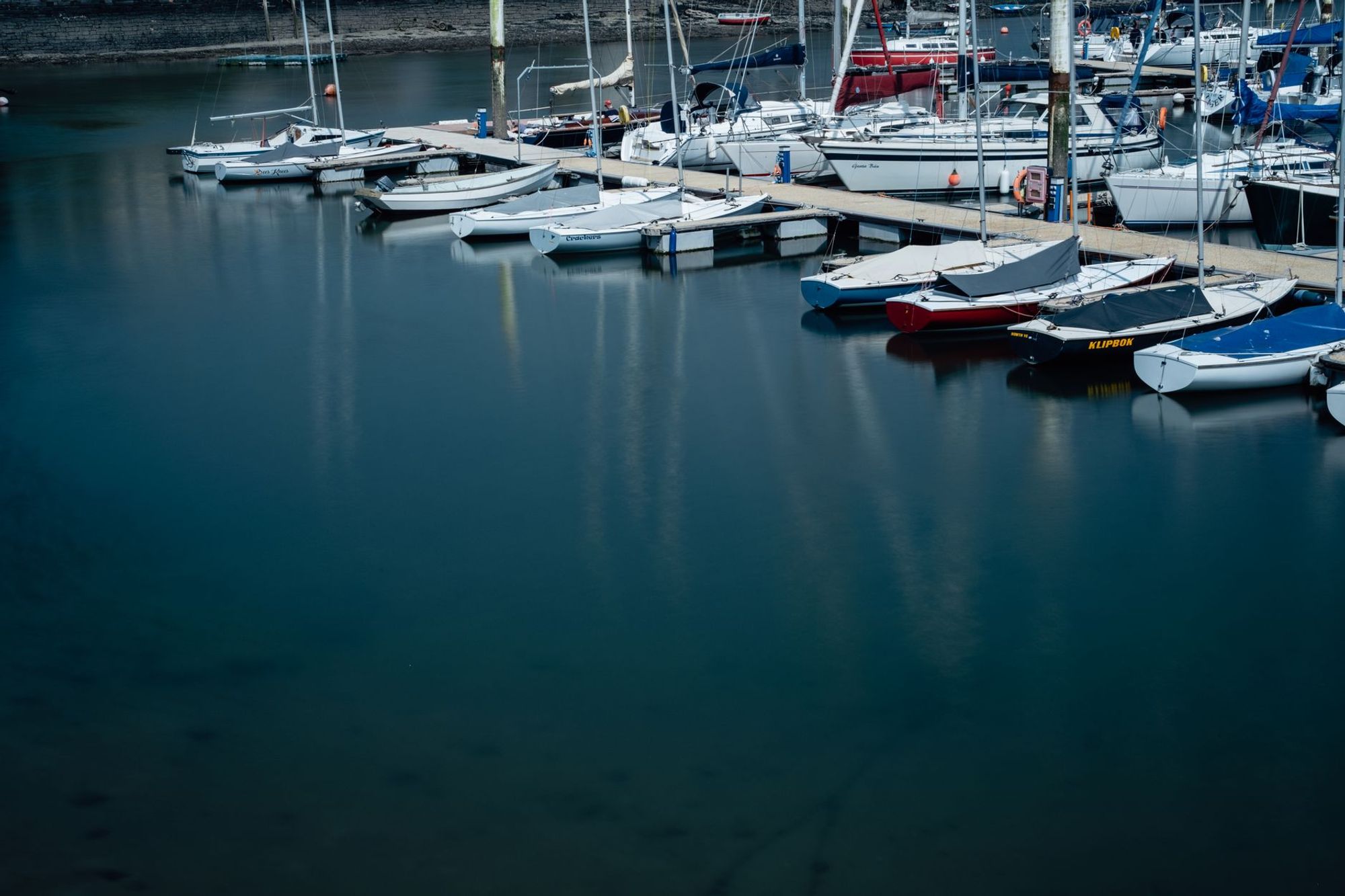
Boats do not age the way cars do. A twenty year old hull that has lived under cover in fresh water and been serviced on schedule can be a far better buy than an eight year old one that has sat on a mooring in salt and been ignored.
Lenders know this, which is why boat age policy is more nuanced than the flat cutoffs you see on car finance. It is also why buyers get caught out: the number that matters is rarely the one on the registration papers.
Age is a proxy, not the actual question
When a lender applies an age limit, it is not making a judgement about seaworthiness. It is estimating how much the boat will be worth at the point in the loan where the outstanding balance is highest relative to the security.
That is why the common test is the age the hull will reach at the end of the term, not its age on the day you buy it. A fifteen year old boat over a seven year term ends the loan at twenty two, and it is that second number the credit policy is usually written around.
The practical consequence is that shortening the term can open up a lender that would otherwise decline. A shorter term means higher repayments, so it is not free, but it is a lever most buyers do not know they have.
Where the value actually sits
On a car, the vehicle is the asset. On a boat, the value is split across three things that age at different rates.
- The hull. Fibreglass in good condition ages slowly. Aluminium plate ages very slowly. This is usually the most durable part of the value.
- The engine or engines. This is where the money is, and where the depreciation is. Repowering a hull with new outboards can cost a substantial share of what the whole rig is worth.
- The trailer, electronics and fitout. Sounders, radios, safety gear and trailers all have their own lifespans, and they are the parts most likely to be tired on a well used boat.
A boat with a good hull and near new engines will often be assessed more generously than its build year suggests, because the lender's valuation is looking at what it would realise on resale, not at its birthday.
Secured, unsecured, and knowing which conversation you are in
There are two ways a used boat gets funded, and the age of the hull is usually what decides which one you are in.
- Secured marine finance. The boat is the security, registered against its hull identification number. This is the lower cost structure, and it is where you want to be if the boat qualifies. Expect asset criteria: age limits, condition requirements, and comprehensive insurance as a condition of the loan.
- An unsecured personal loan. No security is taken, so the lender does not care nearly as much what you buy. This is the usual route for an older hull, a project boat, a private sale that will not meet secured policy, or a purchase where the boat and a pile of gear are bundled together. It costs more, because the lender carries more risk.
There is no shame in the second option and it is frequently the right one. What you want to avoid is spending a fortnight chasing a secured approval on a boat that was never going to meet policy. Our boat loans guide covers the secured product in more detail, and the personal loans guide covers the alternative.
Valuation and survey: who is protecting whom
For anything beyond a modest trailer boat, a lender may want an independent valuation, and for larger vessels a marine survey.
It is worth being clear about who that serves. The valuation protects the lender's security position. The survey protects you. They are not the same document and one does not substitute for the other.
If you are buying a used boat of any real value, a pre purchase survey by a qualified marine surveyor is money well spent regardless of what the lender requires. It is the only part of the process where someone independent physically inspects what you are about to own.
Private sale or dealer changes the paperwork
Most of the good used boats in Australia sell privately, but private sales carry more friction on a finance application.
- The lender has no dealer to settle with, so funds handling and the transfer sequence matter more.
- There is no statutory dealer warranty and usually no cooling off, so due diligence is entirely on you.
- Proof of the seller's ownership and identity becomes your problem to establish.
None of that makes a private sale a bad idea. It just means the checks have to be done properly rather than assumed.
The PPSR boat search is $2 and it is not optional
Before money moves, search the Personal Property Securities Register against the boat's hull identification number. The HIN is the marine equivalent of a car's VIN, usually a 14 character code identifying country, manufacturer, serial number and date of manufacture.
The search costs $2 online, GST does not apply, and the search certificate is included in the fee.
What you are looking for is whether a security interest is registered against that hull. If the previous owner financed the boat and has not paid it out, that interest can survive the sale. You can pay for a boat in full and still have a financier come looking for it.
Read the HIN off the hull yourself. A number supplied by the seller is a number you have not verified.
Repowering an older boat
If the hull is sound and the engines are the problem, repowering is often better value than replacing the whole rig. It also has a finance answer.
New engines on an older hull will rarely meet secured marine policy on their own, because the security being offered is a boat the lender already considers too old. An unsecured personal loan is the usual way that gets funded, and it is worth pricing that against the cost of simply buying a newer boat with the engines already on it.
Do the policy filtering before you apply, not after
Marine credit policy varies more between lenders than almost any other consumer category. Age limits differ. Some lenders write aluminium and fibreglass differently. Some will not touch a private sale. Some cap the loan term on older hulls in a way that quietly kills the deal.
Every application you make leaves an enquiry on your credit file, and a cluster of them reads badly. That is the argument for filtering by policy first and applying once.
Loanseekers compares more than 70 lenders and knows which ones will actually look at an older hull rather than declining it after a week of silence. Start on the boat loans page, or work out the repayment first with our calculator.